Sunday, 3 March 2013

British Pie Week: 4th – 10th March 2013


What is British Pie Week?
British Pie Week is a week where we in the UK celebrate this brilliant pastry filled invention. It would appear that British Pie Week was the idea of the company “Jus Rol” who make readymade pastry: http://www.jusrol.co.uk (the company name: “Jus Rol” came about – allegedly - after the ladies working in the bakery were asked what they did with the pastry cuttings and they replied - "we just roll it out ...!")

History of the Pie:
  • The first pies appeared around 9500 BC in the Egyptian Neolithic period or New Stone Age. Early pies were in the form of galettes (flat / round or freeform crusty cakes) wrapping honey as a treat inside a cover of ground oats / wheat / rye or barley.
  • Historians believe the Ancient Greeks invented pie pastry which was a flour-water paste wrapped around meat and provided a lightweight sealed holder for long sea journeys.
  • Through sea travel this knowledge was transferred to the Romans who having conquered parts of Northern Europe and southern Spain were far more practiced at using salt and spices to preserve and flavour their meats.
  • Apicius a 1st century Roman cookbook made mention of various recipes that involved pie cases.
  • With the advancement of the Roman Empire and its excellent road transport system pie cooking quickly spread throughout Europe.
  • As Medieval cooks had restricted access to ovens due to the cost of constructing ovens and the need for huge supplies of fuel - pies were a popular food that could be easily cooked over an open fire.
  • The English tradition of meat pies dates back to the Middle Ages when an open top pie crust was used as the container for serving the meat and was called a coffyn (the word used for a basket or box).
  • Song birds were a fine delicacy at that time and were protected by Royal Law. At the coronation of eight-year old English King Henry VI (1422–1461) in 1429 "Partryche and Pecock enhackyll" pie was served. This consisted of a cooked peacock mounted in its skin on top of a peacock filled pie. 
  • European royal cooks would often place a cooked bird on top of a large pie to identify its contents – this led to pre-Victorian cooks placing a porcelain ornament on a pie to release steam and to identify it.
  • The Pilgrim Fathers and early settlers took their pie recipes with them to America where they adapted their ingredients and techniques available to them. Thanks to the Native North Americans their first pies were based on berries and fruits.
  • Pies remained a core food staple of travelling and working people in colder northern European countries with regional variations based on both locally grown and available meats as well as the locally farmed cereal crop.
Types of pastry used in Pies:
Pies are a mainstay of English cooking and different pastries are used for different types of pies:  

  • Short Crust Pastry – used in basic pies such as meat & potato / steak pie / chicken and mushroom / minced beef and onion / lamb / game. In recent years more exotic fillings have begun to appear such as: balti curry.
  • Hot Water Pastry – used in scotch pie / pork pie. Melton Mowbray pork pies are the classic pork pie and are world renowned.
Melton Mowbray Pork Pie
Steak & Kidney Pudding
  • Puff Pastry – used in pot pies
  • Suet Pastry – used in steak and kidney puddings (the original filling in this pudding was steak and oyster).


Other Types of Pies:

  • Open pies or flans – mostly served for dessert usually filled with seasonal fruit.
  • Cornish pasty – this is a crescent shaped “pie” that is traditionally filled with beef / onion / swede and potato. The pasty has a crimped edge that makes it easier to hold (I think the crimped edge is the best part of the pasty J). Nowadays there are lots of other fillings on offer such as: lamb & mint / cheese & onion / steak & stilton plus many, many more.
Cornish Pasty

Worldwide Variations:
United Kingdom / Australia / South Africa and New Zealand
  • Meat pies with fillings such as steak / lamb / steak and kidney /minced beef or chicken and mushroom are popular in these countries as take-away snacks. In British Fish & Chip shops pies are served with chips as an alternative to fish and chips.
America
Pot Pie
  • Pot pies with a flaky crust and bottom are very popular in American. They are generally filled with meat (usually beef/ chicken or turkey) / gravy and mixed vegetables (potatoes / carrots and peas). Frozen pot pies are often sold in supermarkets in an individual serving size.
Worldwide
    Apple Pie (a la mode) 
  • Fruit pies are popular everywhere. In America when fruit pie is served with a scoop of ice cream the dish is called “pie à la mode” however many sweet pies are served this way. The most popular pie in the USA is apple pie though any pie with sweet fillings may be served “à la mode”. The combination of pie and ice cream and possibly the name too - is thought to have been made popular in the mid-1890s in the United States. 
Pie throwing:
Cream filled or topped pies are favourite props for humour. Throwing a pie in a person's face has been a staple of film comedy since Ben Turpin received one in Mr. Flip in 1909 and you may also find a pie throwing stall at many school / village & church fetes in the UK – it’s a great way to raise money and you get to throw a pie in the face of a teacher / minor celebrity / etc.
Recipe:
We will be eating a homemade pie this week – steak & mushroom (I think) to celebrate British Pie Week J Here is a link for a recipe for a steak and ale pie you could try:
http://allrecipes.co.uk/recipe/5137/steak-and-ale-pie.aspx

Andria Owen

Wednesday, 27 February 2013

St David's Day


When is St. David's Day?
St David's Day is celebrated on 1st March every year.

Who is St David?
Saint David is the patron saint of Wales.
Very little is known about St David for certain. The little information there is - is based on an account of his life written by Rhigyfarch towards the end of the 11th century therefore we are unsure how much of the historical manuscripts are fact as opposed to legend.
St David (Dewi Sant) was born towards the end of the fifth century. He was a Celtic monk / abbot and bishop who also became the archbishop of Wales. During his life he helped spread the word of Christianity to pagan tribes across Wales and western England.
It is claimed that Saint David was a tall and physically strong man who allegedly ate a very frugal diet of bread and herbs. It is also claimed that he drank only water. 
The most famous story about Saint David tells how he was preaching to a huge crowd and the ground is said to have risen up so that he was standing on a hill and everyone had a better chance of seeing and hearing him.

St David’s Day Celebrations
Cardiff:
Parades are held throughout Wales to celebrate St David’s Day with the largest parade being held in Cardiff. The parade is formally attended by either the Queen or the Prince of Wales and is a mixture of both folklore and military tattoo. Other than the parade – celebrations include concerts & festivals.
Colwyn Bay:
An annual parade through the town centre is now held with several hundred citizens and schoolchildren taking part with other events centred around the parade.
Prestatyn closes the top of the High Street – this is to allow local schools to participate in Welsh singing and local fundraising.
St David's Week festival was inaugurated in Swansea in 2009 with a variety of musical / sporting and cultural events being held throughout the city to mark the national day.
Organises yearly events to celebrate St. David's Day which include a Welsh themed week of fireworks / parades and Disney characters dressed in traditional Welsh attire.


St. David's Day Festival - National Day of Wales is the largest annual event of its kind in the United States encompassing an eisteddfod (this is a Welsh festival of music / literature and performance) / Celtic marketplace / classes and a concert.
  
What are the national emblems of Wales?
The national emblems of Wales are dragons / daffodils and leeks.
Dragons:
The dragon has come to symbolise the fiery Welsh nation who are proud and defiant in the face of adversity (usually in battles with the English).
Legend claims the symbol of the red dragon was sported on a crest by Arthur - son of Uthr Bendragon. It has been said that the father saw a dragon in the sky predicting his son would be king.
Other trains of thought believe the dragon symbol probably found its way into Wales via Rome - when the Roman legions arrived on Welsh shores sporting the mythical / fire-breathing creature as an emblem.
During the Medieval era Welsh poets would compare their brave leaders to dragons and between 1485 and 1603 the dragon formed part of the arms of the Tudor dynasty.
The dragon re-surfaced again in the 19th century when it appeared as the royal badge for Wales in 1807. From then onwards the red dragon was frequently used as a symbol in Welsh patriotic societies and was finally officially recognised by the Queen in 1959.

St David's Day is commemorated by the wearing of daffodils or leeks. Both plants are traditionally regarded as national emblems.
Leeks:
There are many explanations of how the leek came to be adopted as the national emblem of Wales – a few are:
·      One is that St David advised the Welsh on the eve of battle with the Saxons to wear leeks in their caps to distinguish friend from foe.
·         It was believed that eating leeks encouraged good health and happiness
·    Shakespeare mentions in Henry V that the Welsh archers wore leeks at the battle of Agincourt in 1415.
Daffodils:
In total contrast the daffodil is a much younger emblem that gained popularity in the 19th century. Women were especially fond of the bright / cheerful flower as an emblem of Wales.
At the beginning of the 20th century it became even more closely associated with the Principality when Welshman and British Prime Minster David Lloyd George wore it on St David's Day and at ceremonies to mark the investiture of the then Prince of Wales.

What is the National Dress of Wales?
On St David's Day some children in Wales dress in their national costume which consists of:
·         tall black hat
·         white frilled cap
·         long dress


The flag of St David:


The National Flag of Wales:
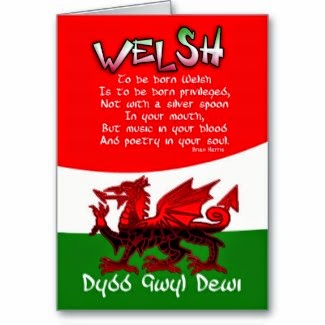
The national flag of Wales depicts a fiery red dragon (Y Ddraig Goch) against a green and white background.


By Andria Owen

Friday, 15 February 2013

Jorvik Viking Festival 2013


1000 years ago when Vikings ruled York great celebrations took place in February called ‘Jolablot’. These celebrations heralded the coming of spring and the survival of winter hardships and were long forgotten until the 1980s when York Archaeological Trust revived Jolablot.

The annual Jorvik Viking Festival is organised by the York Archaeological Trust (they are also responsible for the Jorvik Viking Centre) and is a city-wide celebration of York’s Viking heritage.
This festival is recognised as the largest Viking Festival in Europe attracting thousands of visitors to the city of York. With Viking re-enactors from across Europe attending the festival and enjoying its programme of family-friendly events including guided walks / lectures and battle re-enactments many people return to celebrate the festival year after year to take part and lap up the atmosphere.
The dates of this year’s Jorvik Viking Festival are: Saturday 16th February 2013 until Sunday 24th February 2013 – for a full list of what’s going on and where it’s happening check out details here: http://jorvik-viking-centre.co.uk/festivals/festival-fringe-2013/


Andria Owen

Thursday, 14 February 2013

Kissing Friday (An old and now redundant custom)


When is Kissing Friday?:
Kissing Friday always falls on the Friday after Ash Wednesday

What is / was the custom?:
English schoolboys were entitled to demand a kiss from schoolgirls without fear of punishment or rejection. If the schoolgirl agreed that was great for both of them however is she refused the boy was then allowed to pinch the girl on the bottom. This custom lasted until at least the 1940s (which in today’s world is probably for the best really J)

Sileby


Local custom:
In Sileby – Leicestershire: Kissing Friday was called Nippy Hug Day. Here adult men joined in the fun where they could demand a kiss from the woman of their choice however if their request was denied – the men had the right to 'louse’ (or pinch) the woman's bottom – this was a reference to pinching off lice (the same rules applied as they did with the schoolboys) 


Other information: 
Another blog has also written about this - Kissing Friday and also four other strangest traditions in the UK - check out the blog at:  

http://www.essentialtravel.co.uk/blog/strangest-british-traditions.html  


Andria Owen

Wednesday, 19 December 2012

Winter Solstice


Winter Solstice
What is the Winter Solstice?
The Winter Solstice is the solstice that happens in winter and usually occurs around 21st / 22nd December each year. It is the shortest day of the year when the Sun is at its most southern point - when the Sun is appearing at noon at its lowest altitude above the horizon.
 Since the Winter Solstice lasts only a moment in time other terms have come into use for the day on which the Winter Solstice occurs. These include: midwinter / the longest night / the shortest day / the first day of winter / Yule.
Worldwide interpretation of the Winter Solstice varies from culture to culture with many cultures in the Northern Hemisphere recognising the Winter Solstice as “a celebration of rebirth” which involves holidays / festivals / gatherings / rituals and other celebrations around that time.

History
The Winter Solstice has been part of the annual cycle of the year since Neolithic times. During ancient times – astronomy determined both agricultural and religious events such as: mating of animals / sowing of crops and metering of winter reserves between harvests.
This is verified by the physical remains of the layouts of late Neolithic and Bronze Age archaeological sites such as: Stonehenge in Britain and New Grange in Ireland. Stonehenge is aligned in a sight-line that points to the Winter Solstice sunset whereas New Grange points to the Winter Solstice sunrise and also the Goseck circle which is aligned to both the sunset and sunrise.

Goseck Circle
Part of the reason the Winter Solstice may have been immensely important is because communities were not certain of living through the winter and would have prepared for the winter months during the previous nine months. Starvation was common in winter between the months of January and April which were also known as "the famine months". In mild climates the midwinter festival was the last feast celebration before deep winter set in. Most of the cattle were slaughtered so they would not have to be fed during the winter - it was almost the only time of year when a supply of fresh meat was available and the majority of wine and beer that had been made during the year was finally fermented and ready for drinking during this time.

Celebrations at Stonehenge
It is believed that the Winter Solstice was more important to the people who built Stonehenge than the Summer Solstice and with this in mind each year early on the morning of 21st December people from around the world gather at Stonehenge to mark the Winter Solstice and welcome the sunrise above the stones.

Sunrise at Stonehenge on the day of the Winter Solstice
It appears to be a truly magical time to be at Stonehenge and the ad-hoc celebration brings together England’s New Age tribes (neo-druids / neo-pagans / Wiccans) with ordinary families / party people / travellers and tourists. With hundreds of people at Stonehenge to celebrate the Winter Solstice you would think the noise the crowd made would be thunderous however it has been documented that the crowd become silent as the sky begins to brighten and they all share this spiritual experience.


Celebrating the Winter Solstice at Stonehenge
If you want more information about Stonehenge Tours please check out details at:  http://www.visit-stonehenge.co.uk/index.html

However you are spending the Winter Solstice – whether you’re staying home all cosy or you’re out celebrating - have a great time :D 

Written by: Andria Owen

Friday, 23 November 2012

St Clement's Day - 23rd November


Saint Clement’s Day was traditionally celebrated on the 23rd November (and in some places still is). It was a festival held between Halloween and Christmas. Pope Clement I is the patron saint of metalworkers and blacksmiths and so these workers traditionally enjoyed a holiday on his feast day. A Feast Day is usually a Christian celebration and is the day of the year that is dedicated to honouring a particular saint – this is usually the day of the saint’s death (the day the saint entered heaven). Feast Days are celebrations that are held annually.

Legends and Customs
Ancient legends surrounding Saint Clement suggest that he was the first man to refine iron from ore and to shoe a horse. Clementine customs may originate from earlier pagan rituals as there has allegedly been some confusion of Saint Clement with the early Saxon – Wayland - also known as Wayland the Smith - a fabled metalworker. Wayland the Smith shares this feast day - which marks the beginning of winter – with Saint Clement. Also Saint Clement was a martyr as he was tied to an anchor and tossed into the sea.

Rural Festivities
“Old Clem’s Night” literally started with a bang and a shower of sparks during the ritual called “firing of the anvil”. A blacksmith packed gunpowder into a small hole in an anvil and then struck it severely with a hammer thus causing a small explosion. Anvil firing was twofold as it also tested the anvil’s durability whereas weak anvils would break under the pressure and therefore had to be melted down and recast. The blacksmith or the apprentice would dress up in wig / mask and cloak to represent “Old Clem” and lead a procession of blacksmiths (singing) through the streets - stopping at taverns along the way. The more taverns the blacksmiths stopped at – the more boisterous the singing became and they also demanded free beer or money for the “Clem feast”. Traditional toasts included:
True hearts and sound bottoms
Check shirts and leather aprons
and
Here's to old Vulcan as bold as a lion
A large shop and no iron
A big hearth and no coal
And a large pair of bellows full of holes.
“Vulcan”: In ancient Roman religion Vulcan is the God of beneficial and hindering fire – including the fire of volcanoes. Vulcan is often depicted with a blacksmith’s hammer.

In the nineteenth century in the village of Bramber in West Sussex an effigy of “Old Clem” would be propped up in the public bar while the blacksmiths enjoyed their dinner. The evening would then be rounded off with the Blacksmith’s anthem - “Twanky Dillo”:
Health to the jolly blacksmith the best of all fellows
Who works at his anvil while the boy blows the bellows!

In some rural areas blacksmiths visited homes to beg for beer or wine. To encourage generosity - sometimes an iron pot was passed around: St Clement’s Day was represented on old calendars with the figure of a cauldron. This custom stretched into the visiting custom of “clementing” or “clemening” – this is when children called door-to-door asking for apples / pears and other sweet treats in exchange for singing traditional songs associated with the night. They sang verses such as:
Clementsing, clementsing
Apples and pears
or
Clemany clemany clemany mine
A roasted apple and some good red wine!

Urban Festivities
Celebrating Saint Clements Day was not restricted to just rural areas. Ironworkers’ apprentices at Woolwich Dockyard would disguise one of their fellow workers to play the part of Old Clem. Wielding a hammer and tongs which were the tools of his trade he would be carried in the air by his comrades through the town. Through streets and taverns the apprentices would shout and sing the praises of Old Clem and repeatedly toast his name: “To the memory of Old Clem and prosperity to all his descendants!” As with their “rural cousins” the generous cash donations received would pay for the apprentices’ holiday dinner.
There was one old begging song in particular that referred to the combination (St Clements Day & St Catherine’s Day) with the “catterning” custom two days later on St Catherine’s Day (25th November):
Cattern and Clemen
Be here be here!
Some of your apples and some of your beer!
One for Peter, Two for Paul,
Three for Him who made us all,
Clemen’ was a good man,
Cattern’ was his mother,
Give us your best. And not your worst,
And God will give your soul good rest.

Again children sang for fruit / nuts or money. This continued until 1541 when Henry VIII passed a law forbidding children to beg in this way within the London churches of Saints Clement / St Catherine and St Nicholas. This rule did not apply outside the church buildings where the custom cheerfully continued.

Modern Day Customs
During the 20th century clementing had more or less died out however St Clement’s Day is still celebrated in a few rural parishes with donations going to various charities nowadays.
Burwash – East Sussex
An effigy of Old Clem is still mounted above the door of a tavern (pub) for the annual Clem Feast every 23rd November.
Mayfield – East Sussex
Old Clem and Saint Dunstan - another blacksmith saint who was said to have pulled off the devil’s nose with hot tongs meet together on the same day where a local blacksmith plays Old Clem for the day. He is pulled around in a cart collecting money and firing off his anvil.
Okehampton - Devon
Ironworkers gather from all over the Britain to celebrate St Clement’s Day at Finch Foundry located near Okehampton. Blacksmiths demonstrate their art and display decorative ironware as part of a national competition. The blacksmiths and the public can enjoy Morris Dancing / mince pies and mulled wine.
For more information about Finch Foundry follow the link:

So whatever you’re doing on St Clement’s Day – have a great time :D 

Sunday, 11 November 2012

Armistice Day


What is Armistice Day
Armistice Day is celebrated every year on 11 November to commemorate the peace agreement signed between the Allies of World War I and Germany at Compiègne, France for the cessation of hostilities on the Western Front of World War I. This took effect at eleven o'clock in the morning on the "eleventh hour of the eleventh day of the eleventh month" of 1918.
Although this “official” date to mark the end of the Great War reflects the ceasefire on the Western Front - hostilities continued in other regions, especially across the former Russian Empire and in parts of the old Ottoman Empire.
In the UK the day was specifically dedicated by King George V on 7 November 1919 as a day of remembrance for members of the armed forces who were killed during World War I.
The date was also declared a national holiday in many allied countries also to commemorate those members of the armed forces who were killed during World War I with the exception of Italy. In Italy the end of the war is commemorated on 4 November - the day of the Armistice of Villa Giusti.
After World War II the name of the holiday was changed in different countries:
America - Verterans Day 
Countries of the British Commonwealth of Nations – Remembrance Day
France and Belgium - Armistice Day

The Significance of the Poppy
The red remembrance poppy has become a very familiar emblem of Remembrance Day due to the poem "In Flanders Fields".
These poppies bloomed across some of the worst battlefields of Flanders in World War I their brilliant red colour an appropriate symbol for the blood spilled in the war.

In Flanders Field

In Flanders fields the poppies blow
Between the crosses, row on row,
That mark our place; and in the sky
The larks, still bravely singing, fly
Scarce heard amid the guns below.

We are the Dead. Short days ago
We lived, felt dawn, saw sunset glow,
Loved and were loved, and now we lie
In Flanders fields.

Take up our quarrel with the foe:
To you from failing hands we throw
The torch; be yours to hold it high.
If ye break faith with us who die
We shall not sleep, though poppies grow
In Flanders fields.

How is Armistice Day Commemorated in the UK?
In the United Kingdom two minutes of silence are observed on 11 November every year (whatever day of the week the date falls in) however the main observance is on the second Sunday of November - Remembrance Sunday. The beginning and end of the two minutes' silence is often marked in large towns and cities by the firing of ceremonial cannon however if a cannon is not available “The Last Post” is played on a bugle to introduce the start of the two minutes silence whilst the sounding of “Reveille” ends the two minutes silence. Also church services frequently incorporate one minute's or two minutes' silence within their Sunday service.

Second Sunday of November:
The Queen laying a wreath at the Cenotaph
Ceremonies are held at local war memorials throughout the country and are usually organised by local branches of the Royal British Legion. The Royal British Legion is an association for ex-servicemen. Typically poppy wreaths are laid by representatives of the Crown (the Royal Family) / the armed forces and local civic leaders (such as the Mayor of the town / city or head of the local parish). Local organisations such as: ex-servicemen organisations / cadet forces / the Scouts  / Guides / Boys' Brigade / St John Ambulance and the Salvation Army are also involved.

11th November:
Wreath-laying ceremonies are observed at many war memorials across the UK at 11 a.m. on the 11th of November led by the Royal British Legion. 

Wreath laying in a local village

Many employers and businesses invite their staff and customers to observe the two minutes' silence at 11:00 am both on the second Sunday of November and 11th November (if the Remembrance Day falls on a different day)  

The First Ever Two Minute Silence in London
The Silence
“The first stroke of eleven produced a magical effect. The tram cars glided into stillness, motors ceased to cough and fume, and stopped dead, and the mighty-limbed dray horses hunched back upon their loads and stopped also, seeming to do it of their own volition. Someone took off his hat, and with a nervous hesitancy the rest of the men bowed their heads also. Here and there an old soldier could be detected slipping unconsciously into the posture of 'attention'. An elderly woman, not far away, wiped her eyes, and the man beside her looked white and stern. Everyone stood very still ... The hush deepened. It had spread over the whole city and become so pronounced as to impress one with a sense of audibility. It was a silence which was almost pain ... And the spirit of memory brooded over it all. “
Manchester Guardian, November 12th 1919 – thanks to:


Written by: Andria Owen